1. The recorder lineup at a glance
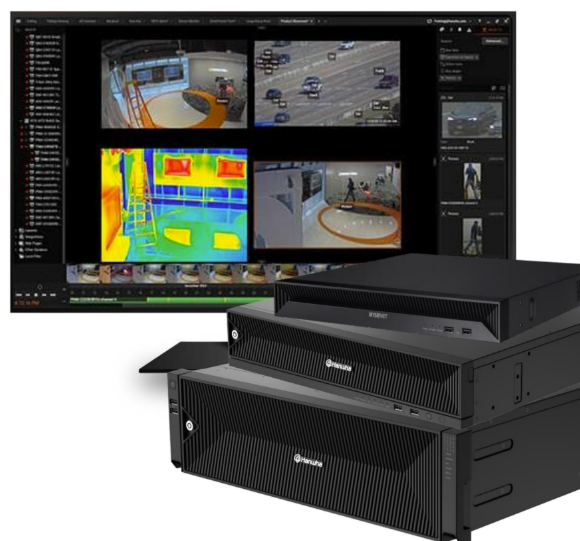
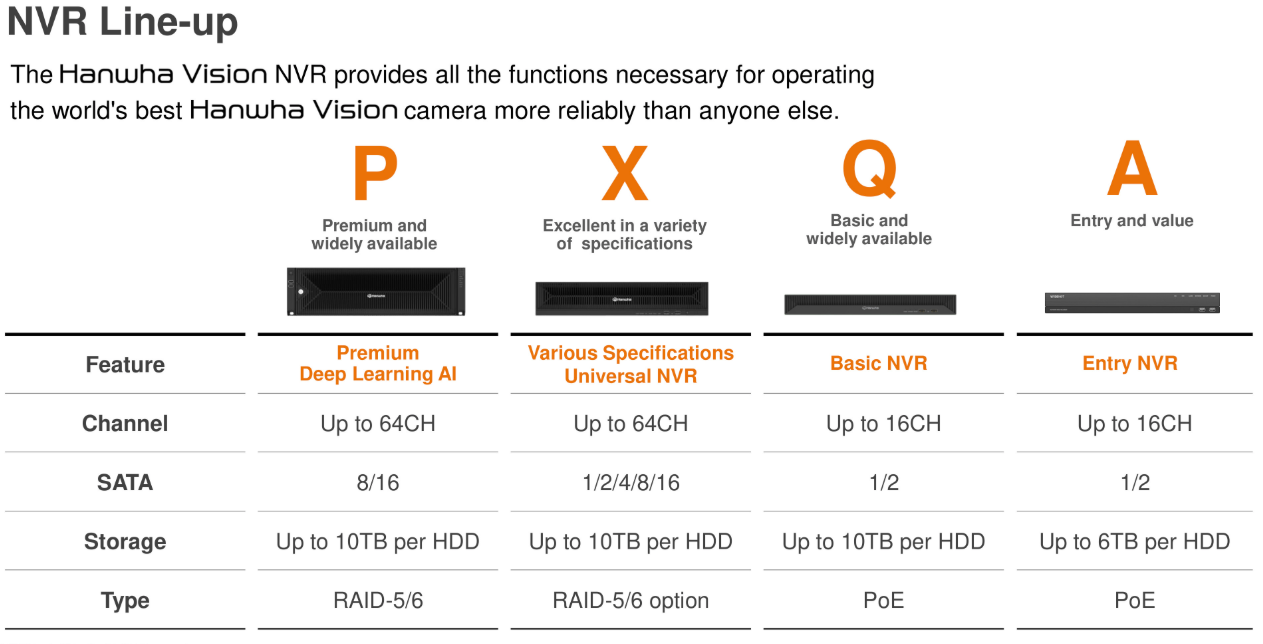
Hanwha's network video recorders (NVRs) come in four main series. All of them are license-free to record Hanwha cameras, support dual-stream recording, and connect directly to free mobile/desktop clients or full WAVE deployments.
P series (PRN-) — flagship
The high-end class: large channel counts, 8K recording, RAID 5/6 storage, up to 16 HDD bays, AI analytics support and ARB backup. Built for high-liability sites.
X series (XRN-) — mainstream
The everyday workhorse: strong feature set, AI-recording models available, PoE-switch variants that power cameras directly from the recorder.
W series (WRN-) — value
Budget-friendly recording for smaller sites, keeping Hanwha camera compatibility and remote access intact.
Q series (QRN-) — compact
Compact recorders for small deployments — retail counters, small offices — where space matters as much as features.
2. Decoding NVR model numbers
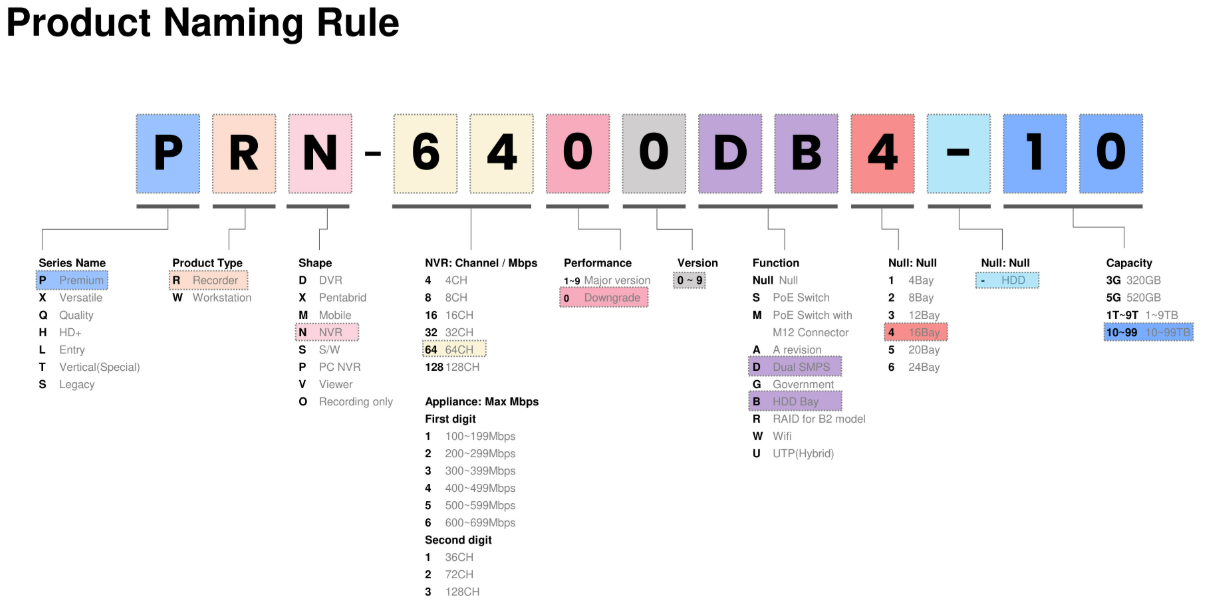
NVR model numbers follow the same series logic as cameras (P flagship, X mainstream, W value, Q compact), with the channel count, bay count, and feature letters packed in. Suffixes you'll actually see:
- S — built-in PoE switch (cameras power straight from the recorder)
- D — dual power supplies · R — RAID
- W — WAVE server edition (ships ready to run WAVE)
- Bay counts range from 4 to 16 bays; some models list storage capacity directly
Example: XRN-1610SA — X series, 16-channel, built-in PoE switch, current revision. Hanwha's official Product naming rules page has the interactive decoder; we'll happily decode any model you're comparing.
3. AI NVRs: give your existing cameras AI
An AI NVR can run AI analytics on streams from ordinary, non-AI cameras — including many third-party ONVIF models. The camera sends plain video; the recorder's AI engine detects people and vehicles, extracts attributes, and even runs plate recognition via add-on apps.
Why that matters: you can phase an upgrade. Keep working cameras, add an AI recorder, and the whole system gains object search and attributes without replacing the camera fleet. When cameras age out, replace them with AI cameras and the analytics move to the edge for even better accuracy.
Throughput and feature availability vary by recorder generation and app — tell us what you have, and we'll map exactly what your fleet gains. See also AI add-on applications.
Upgrade paths at a glance
- Keep cameras → add AI NVR → AI analytics on existing streams
- Add licensed on-camera apps (WisenetAI) on capable models
- Add an AI Box appliance for clusters of streams
4. WAVE appliances & BLAZE
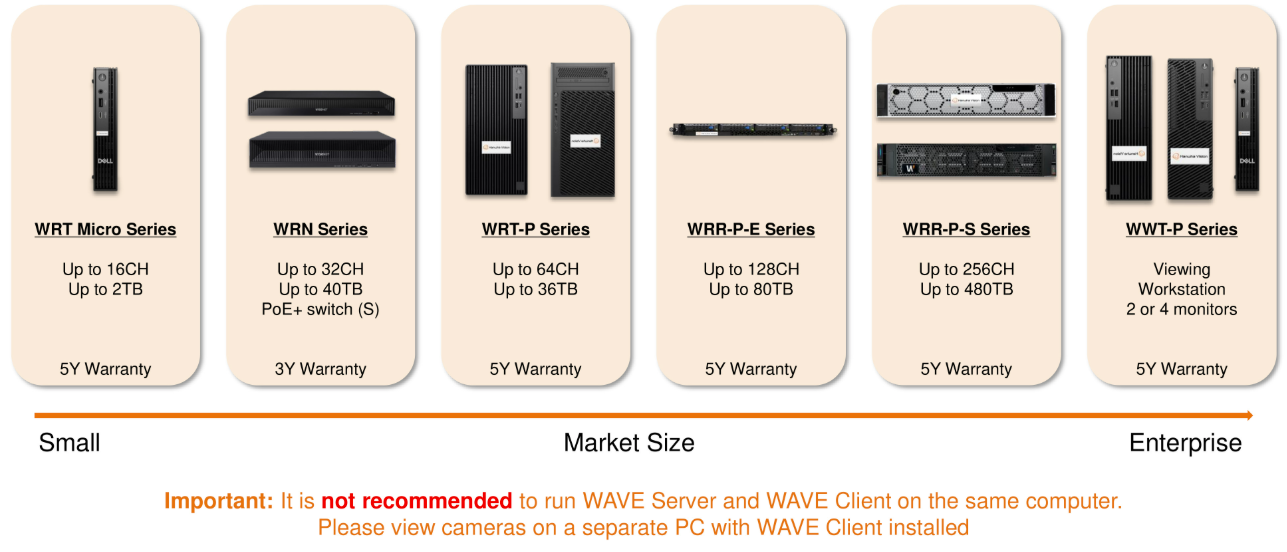
A WAVE appliance is a Hanwha recorder that ships with the Wisenet WAVE VMS already installed and licensed — a turnkey video system. Power it on, discover your cameras, and you're monitoring. No OS setup, no server build, no software install day.
BLAZE takes the appliance idea further: a hybrid AI VMS line (BRB/BRR/BRT/BWT series) with embedded AI processing for semantic and similarity search — "find a person in a red jacket near the gate" — plus cloud-based federation across sites. Hanwha even publishes a BLAZE Compatibility checker so you can validate a planned configuration before ordering.
Both appliance styles free you from the classic "build a VMS server" project — and are what we deploy when a customer wants full software capability without an IT project.
5. Managing NVRs from WAVE
With WAVE's embedded-recorder support, appliance NVRs become first-class citizens inside the VMS: NVR features are controlled right from the WAVE client — recording schedules, archive access (multiple archive connections per channel), NVR events appearing in the same event stream, and health/telemetry from the recorder. Operators manage one interface instead of hopping between NVR web pages and a separate VMS. See managing NVRs from WAVE in the Wave guide.
6. Cybersecurity: signed firmware & Secure by Design
Cameras and recorders are network devices — they deserve the same security expectations as any server. Hanwha's "Secure by Design" program includes:
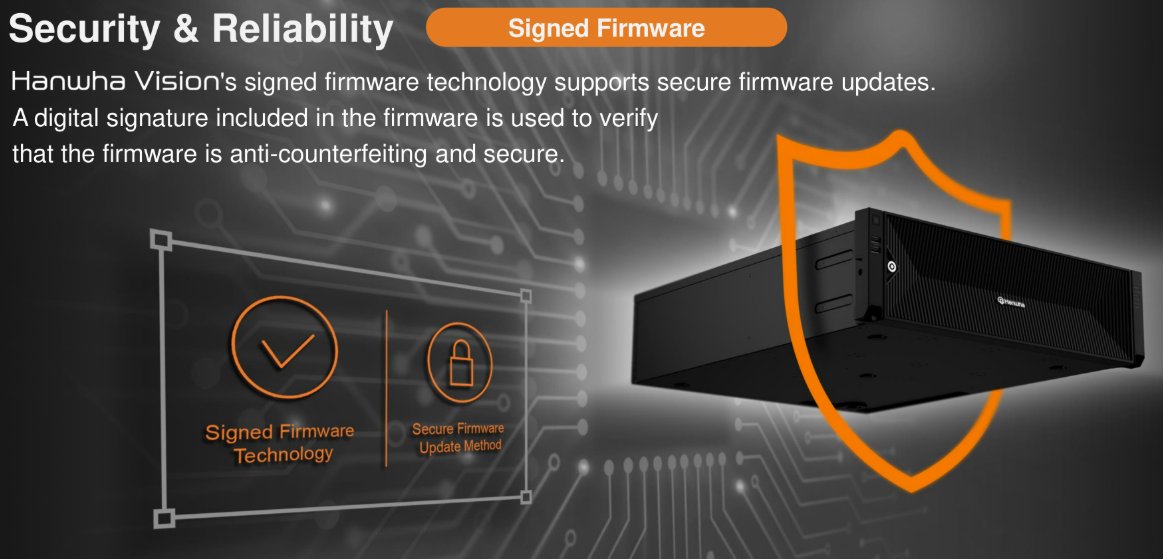
- Signed firmware — every update is cryptographically verified; tampered firmware is refused at boot
- Secure Boot + TPM — hardware root of trust; some platforms certified to FIPS 140-2/140-3 levels
- Published SBOM — a software bill of materials for every product
- Dedicated S-CERT team — Hanwha is a CVE Numbering Authority (CNA) that issues and tracks its own security IDs
- Standards work — ISO/IEC 27001 certification, IEC 62443-4-1 secure development
- NDAA-compliant product lines for government and critical-infrastructure customers
For you, that means updates are safe to apply, the supply chain is auditable, and your security cameras aren't the soft spot in the network.
7. POS text-in-video
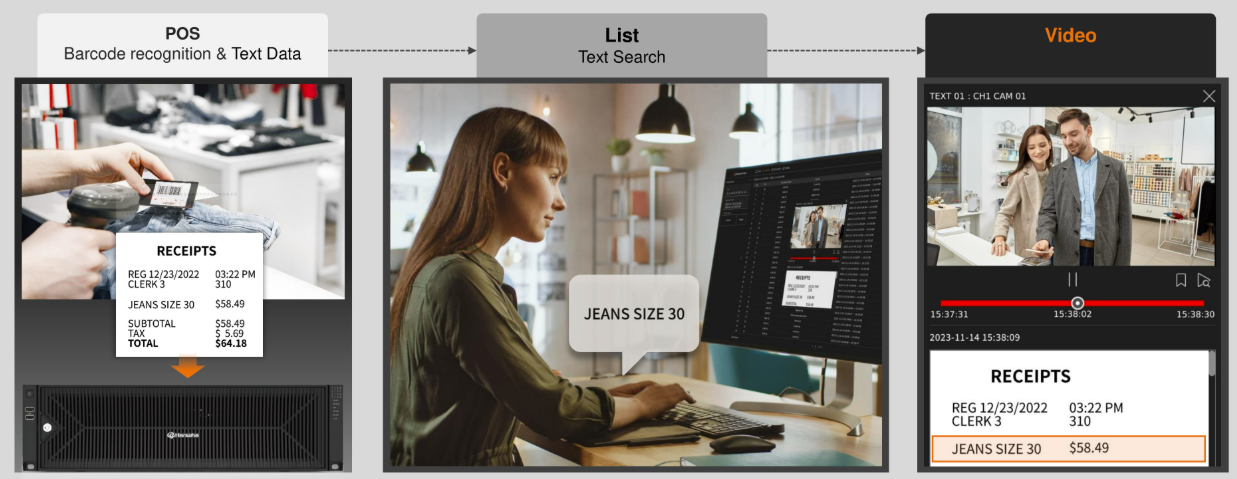
Retail loss prevention needs video and transactions together. Hanwha NVRs support point-of-sale text-in: receipt data streams from up to 64 POS terminals over the network (standard text-in protocol, receipt start/end markers, US-ASCII or UTF-8) and is overlaid on the matching video.
Every transaction is then a searchable event: look up a receipt number, amount, or item and jump straight to the camera moment where it happened. Refund fraud, sweetheart deals, and till disputes stop being he-said-she-said.